
A decision to hold can be reasonable when your investments still fit your goals, time horizon and capacity for risk. It should follow a review. It should not replace one.
A market fall. A disappointing quarter. A friend discussing an investment that has performed better than yours.
Each can create the same feeling: perhaps you should do something.
Investing makes activity visible. You can see a purchase, a sale or a switch. It is harder to see the work behind a decision to leave a portfolio unchanged.
Yet a transaction is useful only when it serves a purpose. Sometimes, after reviewing the facts, there is no sufficient reason to make one.

Review with purpose.
Act when there is a reason.
Why we feel the need to act

When markets are uncertain, taking action can feel like taking control. Selling may bring temporary relief from anxiety. Buying a recent winner may ease the feeling of being left behind.
But relief is not the same as a sound investment reason.
Before making a change, ask: What problem will this transaction solve in my financial plan?
If the answer is only “the market moved” or “someone else earned more”, pause and examine the decision more closely.
What a decision to hold should involve
Leaving investments unchanged should be an outcome of monitoring and review. It should not mean ignoring statements, avoiding difficult decisions or assuming every investment will eventually recover.
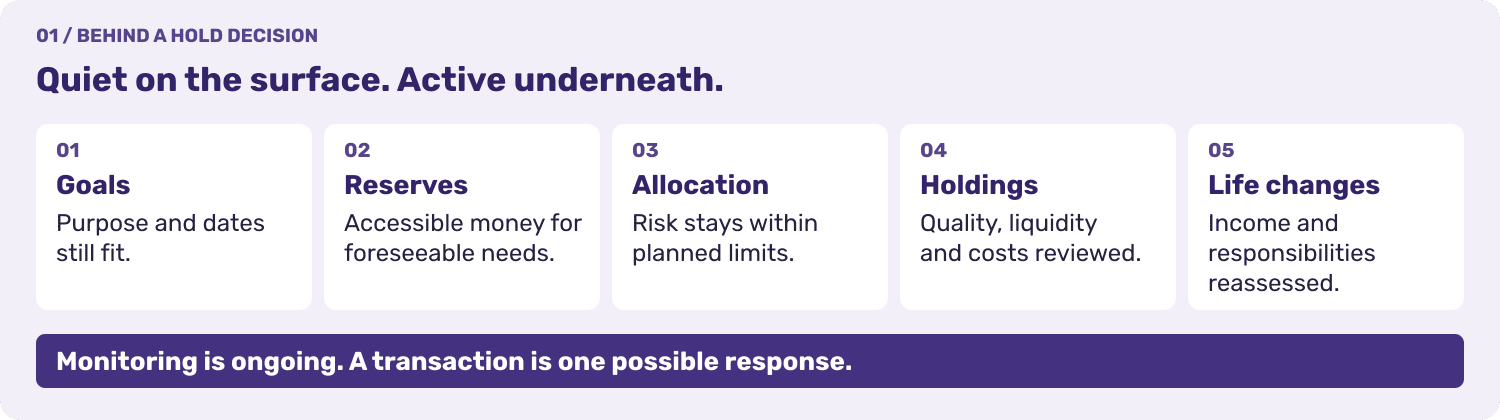
A review can examine whether:
- Your financial goals and the dates when you need money remain unchanged.
- You have sufficient accessible funds for foreseeable expenses and emergencies.
- Your mix of equity, debt and other assets remains within your planned limits.
- Your investments remain suitable, including their quality, concentration, liquidity and costs.
- Your income, responsibilities and ability to absorb losses have changed.
If these remain appropriate, market movement alone may not justify a transaction.
When leaving a portfolio unchanged may be reasonable
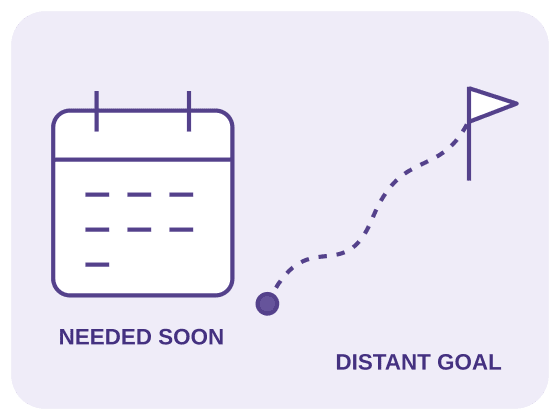
Money intended for a distant goal serves a different purpose from money needed soon. A short period of volatility may not require the same response in both cases.
A longer horizon can provide more time to navigate fluctuations, but it does not remove investment risk or guarantee recovery. The investment itself must still be suitable.
Your asset allocation remains appropriate
An investment does not become unsuitable simply because another asset has recently performed better. Switching repeatedly towards recent winners can move a portfolio away from its intended level of risk.
Review the overall allocation before reacting to individual returns. SEBI’s investor-education article, Factors to Consider Before Investing, discusses goals, investment horizon, risk appetite, diversification, asset allocation and regular portfolio reviews.
The proposed change has no clear purpose
Every proposed switch deserves a reason. It may involve transaction costs, exit charges or tax consequences, depending on the investment and your circumstances.
These costs do not make a necessary change wrong. They do mean that a change should offer a clear planning or risk-management benefit rather than merely create activity.
When doing nothing can be the wrong decision
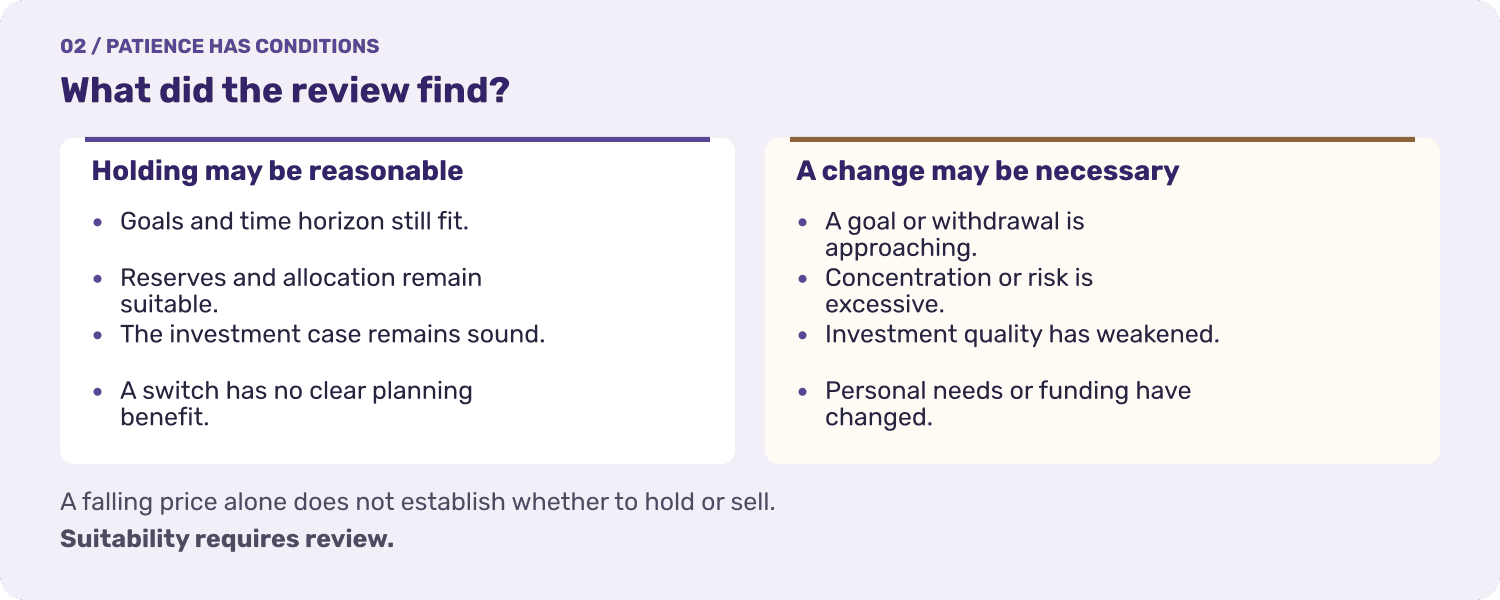
- A goal is approaching: money needed soon may be exposed to more volatility than you can afford.
- Risk has drifted: market movements or new purchases have created excessive exposure to an asset, company or sector.
- The investment case has weakened: financial deterioration, governance concerns or a change in the product’s characteristics requires reassessment.
- Your circumstances have changed: retirement, job loss, a health event or a major family commitment changes your financial needs.
- The plan is no longer adequately funded: contributions, goal amounts or timelines need adjustment.
Holding indefinitely is not a remedy for an unsuitable investment. Diversification can reduce concentration risk, but it cannot prevent all losses.
A practical example: the same market, different decisions
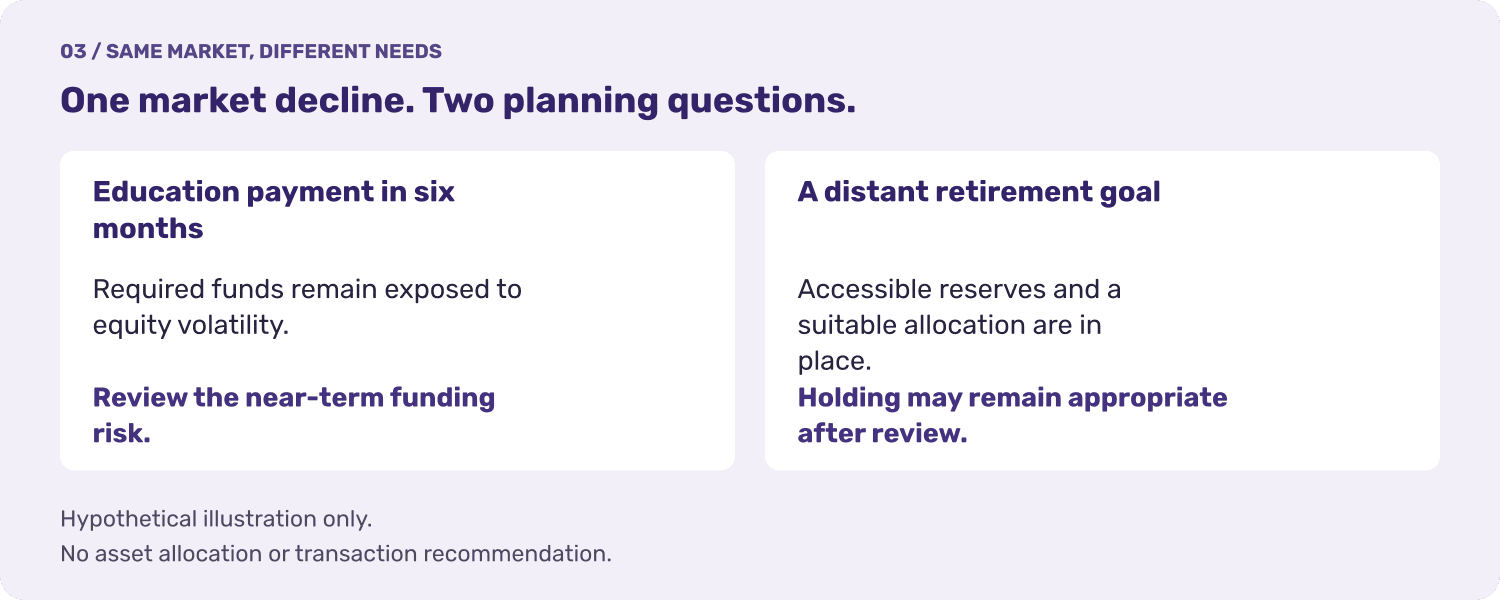
One needs money for an education payment in six months, with those funds still exposed to equity volatility. The other is investing for a distant retirement goal, has accessible reserves and remains within a suitable asset allocation.
The first person has a near-term funding risk that deserves attention. The second may have no immediate reason to change the portfolio, subject to reviewing the holdings and personal circumstances.
The market event is identical. The financial decisions may be different.
This is a hypothetical illustration of planning considerations, not an allocation recommendation.
A short checklist before you make a change
- Name the trigger. Is it a change in your life, the investment or only the headlines?
- Identify the affected goal. When will you need the money?
- Check the risk. Has your allocation or capacity to absorb losses changed?
- Compare the consequences. What are the risks of holding and changing, including costs and tax implications?
- Record the decision. Note why you are acting or holding, and what would trigger another review.
A planned review date can help. Significant changes in your circumstances or investments may require attention sooner.
For retirement, separating near-term spending needs from longer-term investments can make these decisions clearer. Our Retirement Planning Framework discusses this approach and its limitations.
Make the decision serve the plan
The question is whether the decision continues to support your goals at a level of risk you can bear.
Risk warning: Investment in securities market are subject to market risks. Read all the related documents carefully before investing.
Regulatory disclosure: Registration granted by SEBI, enlistment with BSE and certification from NISM in no way guarantee performance of the IA or provide any assurance of returns to investors.