Retirement Preparedness as a Coordinated Financial Process
Retirement planning requires coordinated decision-making across investments, risk exposure, tax efficiency, income sustainability, and long-term family security. Our framework evaluates retirement readiness not only for joint-life assumptions, but also for surviving spouse continuity and second-life financial stability.
Establishing Retirement Lifestyle & Income Goals
Retirement planning begins with clarity around:
• Desired lifestyle post-retirement
• Expected retirement age
• Estimated annual living expenses
• Healthcare cost expectations
• One-time retirement goals (travel, relocation, etc.)
This establishes the income requirement that retirement corpus must support.
Evaluating Retirement Corpus Adequacy
We assess whether existing and projected assets can sustain retirement needs by analyzing:
• Inflation-adjusted expense projections
• Life expectancy assumptions
• Expected rate of return assumptions
• Healthcare and contingency buffers
• Stress scenarios under conservative modeling
The objective is to reduce the probability of premature corpus depletion.
Designing Sustainable Retirement Income
Retirement income may arise from multiple sources:
Pension income, Systematic withdrawals, Fixed income instruments, Equity assets, Rental or other passive income
We evaluate:
• Sustainable withdrawal rate
• Income stability
• Capital preservation balance
• Long-term sustainability under varying market conditions
Retirement income design is structured to balance stability and longevity risk.
Planning for Surviving Spouse Security
Retirement planning must account for the financial stability of the surviving spouse.
We evaluate:
• Continuation or reduction of pension income
• Joint vs single income implications
• Liquidity needs during transition
• Change in expense structure
• Nomination and ownership alignment
The objective is to ensure financial independence continues even after one spouse’s lifetime.
Second-Life Planning & Scenario Analysis
Retirement planning must extend beyond joint-life assumptions.
When one spouse passes away, financial dynamics change significantly:
• Household expenses adjust
• Pension benefits may reduce
• Risk tolerance may shift
• Investment management responsibility may consolidate • Investment management responsibility may consolidate
We conduct structured scenario modeling to evaluate:
• Income sufficiency under single-life assumption
• Corpus sustainability for extended longevity
• Required asset allocation adjustments
• Liquidity adequacy
• Behavioral and decision-making risks
Retirement planning that does not evaluate second-life scenarios remains incomplete.
Portfolio Realignment & Risk Calibration
As retirement nears:
• Capital preservation becomes important
• Income stability gains priority
• Market volatility tolerance typically reduces
• Liquidity buffers are strengthened
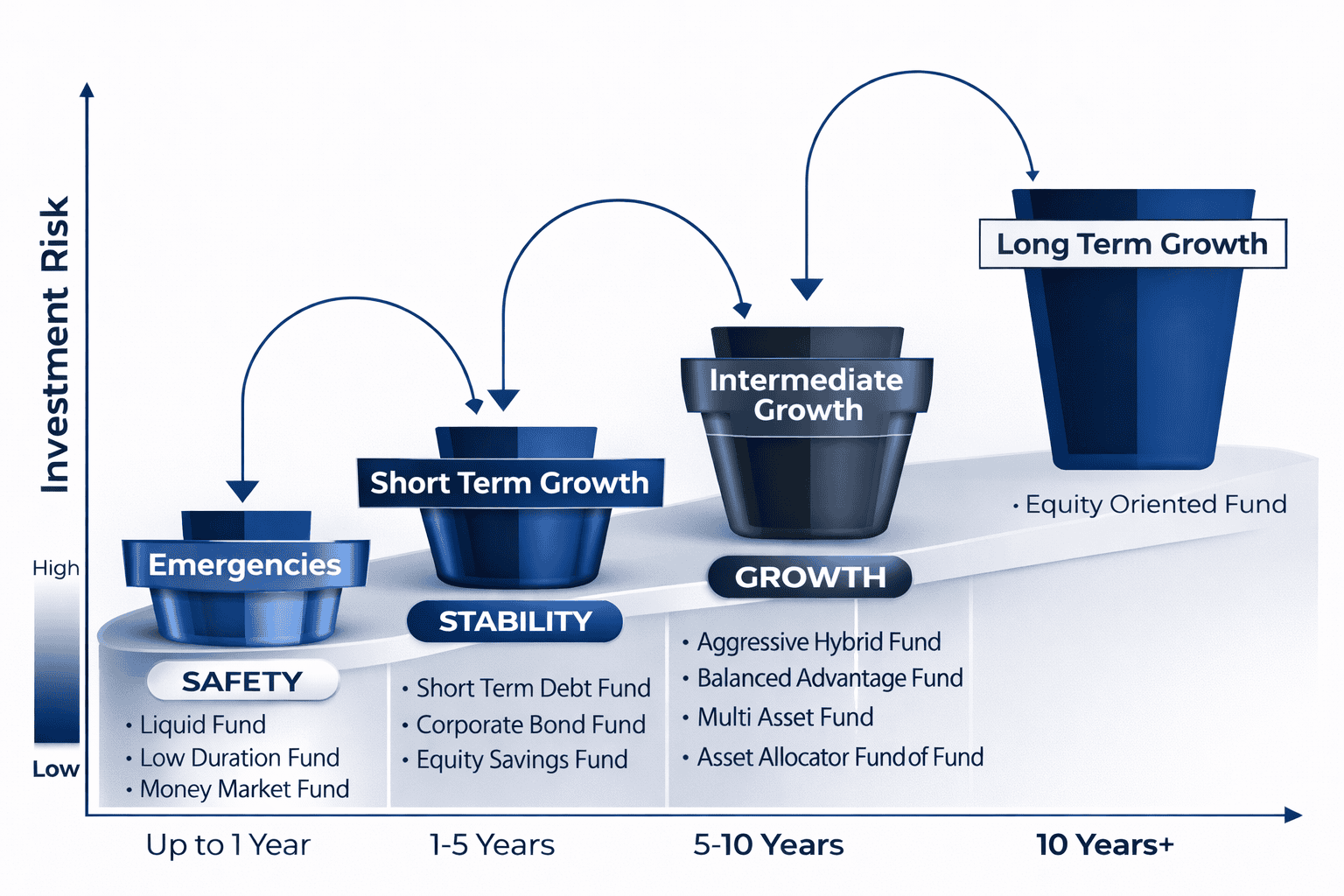
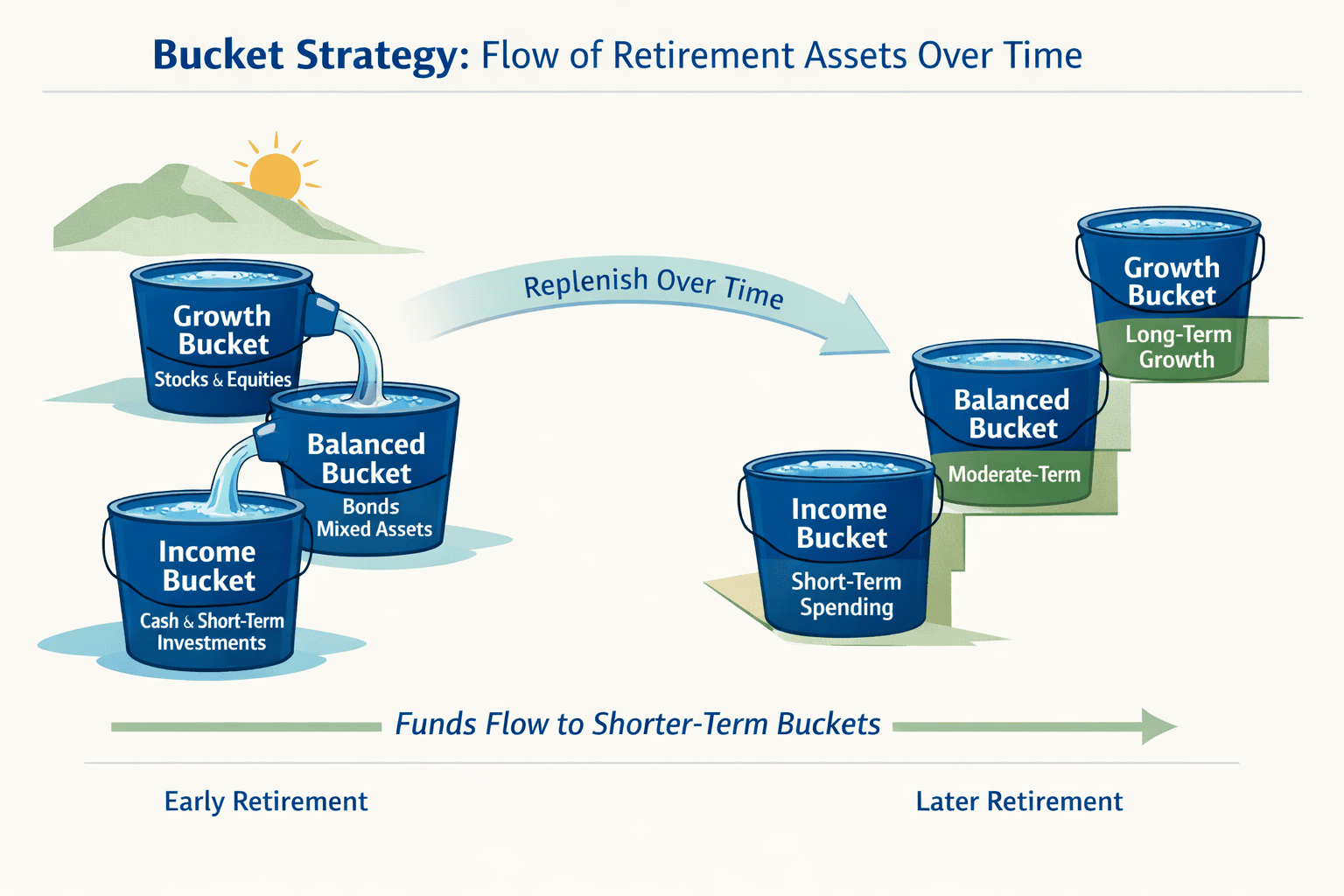
We provide structured evaluation of asset allocation to balance growth, stability, and sustainability.
Designing a Tax-Efficient Withdrawal Strategy
Withdrawal sequencing significantly impacts long-term corpus sustainability.
We consider:
• Capital gains taxation
• Holding period implications
• Income slab changes
• Order of asset drawdown
• Reinvestment implications
Tax efficiency improves sustainability over long retirement horizons.
Managing Longevity & Inflation Risk
Retirement may span 25–35 years or longer.
We evaluate:
• Inflation-adjusted withdrawal strategy
• Asset longevity under stress scenarios
• Sustainable withdrawal rate discipline
• Periodic rebalancing
The aim is to protect purchasing power across extended time horizons.
Contingency Planning & Estate Coordination
Retirement planning intersects with estate considerations.
We review:
While we do not provide legal drafting services, we ensure financial structures align with estate intentions.
Ongoing Review & Structured Adjustment
Retirement planning is dynamic.
We conduct structured periodic reviews to evaluate:
• Expense changes
• Market movements
• Healthcare developments
• Tax regulation updates
• Family changes
Adjustments are made within a disciplined advisory framework.
Begin a Structured Retirement Assessment
If you would like to evaluate retirement preparedness under a structured advisory framework, schedule an introductory discussion.
Explore our:
Our Advisory Framework
Fee-Only Model
Frequently Asked Questions on Retirement Planning
Structured retirement planning is a coordinated process that evaluates retirement corpus adequacy, income sustainability, risk exposure, tax efficiency, and long-term financial stability. It integrates investment planning with lifestyle needs and contingency considerations.
Corpus adequacy is evaluated using inflation-adjusted expense projections, life expectancy assumptions, sustainable withdrawal modeling, and stress testing under conservative return scenarios. The objective is to reduce the risk of premature depletion.
We assess pension survivorship benefits, income reduction scenarios, liquidity requirements, asset ownership structures, and tax implications to ensure that the surviving spouse maintains financial independence and lifestyle stability.
Withdrawal sequencing affects tax liability and long-term corpus longevity. A structured withdrawal strategy considers capital gains taxation, income slabs, holding periods, and asset allocation discipline to enhance sustainability.
No. Retirement planning integrates investments, income planning, tax considerations, risk management, healthcare contingencies, and estate alignment. Investments are one component of a broader coordinated framework.
Retirement plans should be reviewed periodically—typically annually, or sooner if significant life, market, or regulatory changes occur.
Second-life planning refers to scenario modeling where one spouse survives the other. It evaluates income continuation, tax changes, expense adjustments, and corpus sustainability under a single-life assumption. This ensures retirement security extends beyond joint-life projections.
We model retirement over extended horizons (25–35 years or more) and incorporate inflation-adjusted expense assumptions, sustainable withdrawal rates, and periodic portfolio rebalancing to mitigate longevity and purchasing power risk.